Sub-Total: $0.00
Discover Unique Equine Traits
The Mystery Behind the Bashkir Curly Horse
The exact origin of the Bashkir Curly Horse is one of the greatest mysteries of the horse world.
Ancient History of Curly-Coated Horses
Horses with curly coats are most certainly an ancient breed. They have been depicted in art and statuary in early China as far back as 161 AD. There has been evidence of their presence in South America and Europe.
Early Recognition in Publications and Artwork
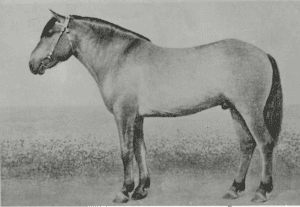
A photo of a curly-coated Bashkir horse from Russia was printed in the 1938 March issue of Nature magazine entitled “The Evolution of the Horses.” The horse’s picture was later drawn by John Hix and featured in a cartoon called “Strange as it Seems.” The clipping had been saved in a scrapbook by the Damele (Duh-mel’ly) family (early-day curly horse breeders in Nevada). This information was one of the factors that helped in determining the name of this unique breed, the American Bashkir Curly Horse.
Curly Horses in North America
It is still a mystery how the Curlies came to the US. But there is evidence that Curlies have been in North America since the early 1800s. Many Indian pictographs illustrating the “Winter Counts” have noted that in the winter of 1801-1802, the Sioux had stolen some curly horses from the Crow. This incident placed the tribes at the Standing Rock/Cheyenne River Reservation at the mouth of the Grand River.
Curlies on Indian Reservations and Wild Lands
A significant location of the Curlies today has been traced to Indian reservations in North Dakota and South Dakota. Many Curlies, then and now, have been acquired from the wild horses that roam the lands of the United States.
The Russian Bashkir Theory
One theory why curly-coated horses ended up roaming with the wild mustangs of the West was that the Russian Bashkir Curly horses, which were originally shipped with the Russian colonists who tried to settle America’s Northwest Territory during the 1700s, had set their remaining horses free after abandoning their westward expansion.
Unfortunately, through further research, including consultations with Russian scientists, the Moscow Zoo, and the Ministry of Agriculture, it was determined that there are no curly-haired horses from the Bashkir region.
The Ice Age Land Bridge Theory
Another theory is that the ancestor of the Bashkir Curly Horse might have crossed the land bridge during the last Ice Age. But there is no fossil evidence to support the existence of horses in America from the last Ice Age until the reintroduction of horses to this hemisphere by the Spanish.
Formation of the American Bashkir Curly Horse Breed
Fortunately, more is known about the development of the modern Bashkir Curly Horse.
The Modern-Day History
The modern-day history of the American Bashkir Curly dates to 1898, when young Peter Damele and his father were riding the Peter Hanson Mountains in the remote high country of Central Nevada, near Austin. Peter recalled seeing three horses with tight, curly ringlets over their entire bodies. It was intriguing to both father and son as to where these horses had come from and just why they were there, questions that, as you can see, are still not answered. However, from that day to this, there have always been curly-coated horses on the Damele range. Many of the Bashkir Curly Horses in the U.S. can be traced back to the Damele herd.
Establishing the Registry
Establishing the American Bashkir Curly Horse Registry in 1971, the founders set out to save these animals from extinction in the U.S., as it was found that too many of them, through ignorance, were being slaughtered. They then began the process of establishing breeding traits. To accomplish this, owners were asked to list the characteristics unique to the Bashkir Curly Horse. When compiled, these brought out several interesting features of the breed.
Curly Conformation
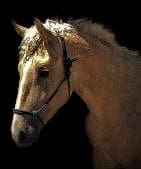
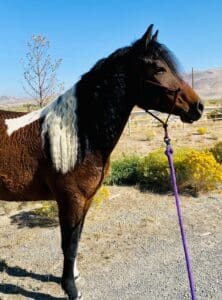
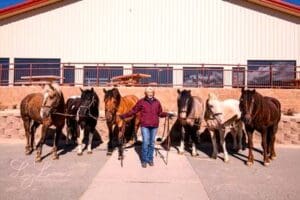
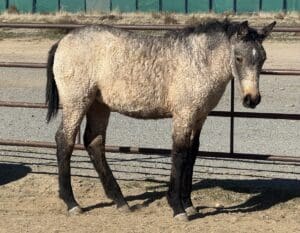
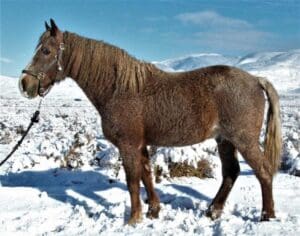
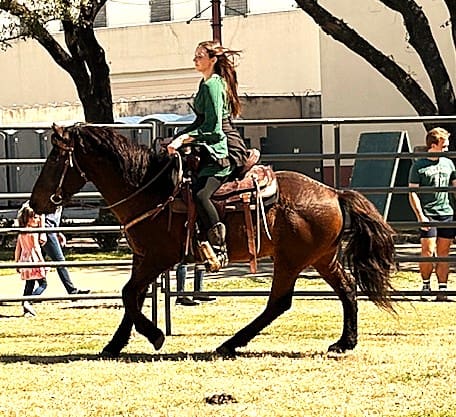
Bashkir Curly Horses appear in all common horse colors, including Appaloosa and Pinto. Curlies somewhat resemble the early-day Morgan in conformation, and a number of traits have been found in this unique breed that link them to the primitive horse. Curlies are of medium size. Their soft, calm-looking eyes have an unusual Oriental slant to them, which gives them a sort of sleepy look but which also tends to give them a larger range of vision to the rear. The sleepy look is very deceiving, as they have a proud carriage, are very alert and not lazy.
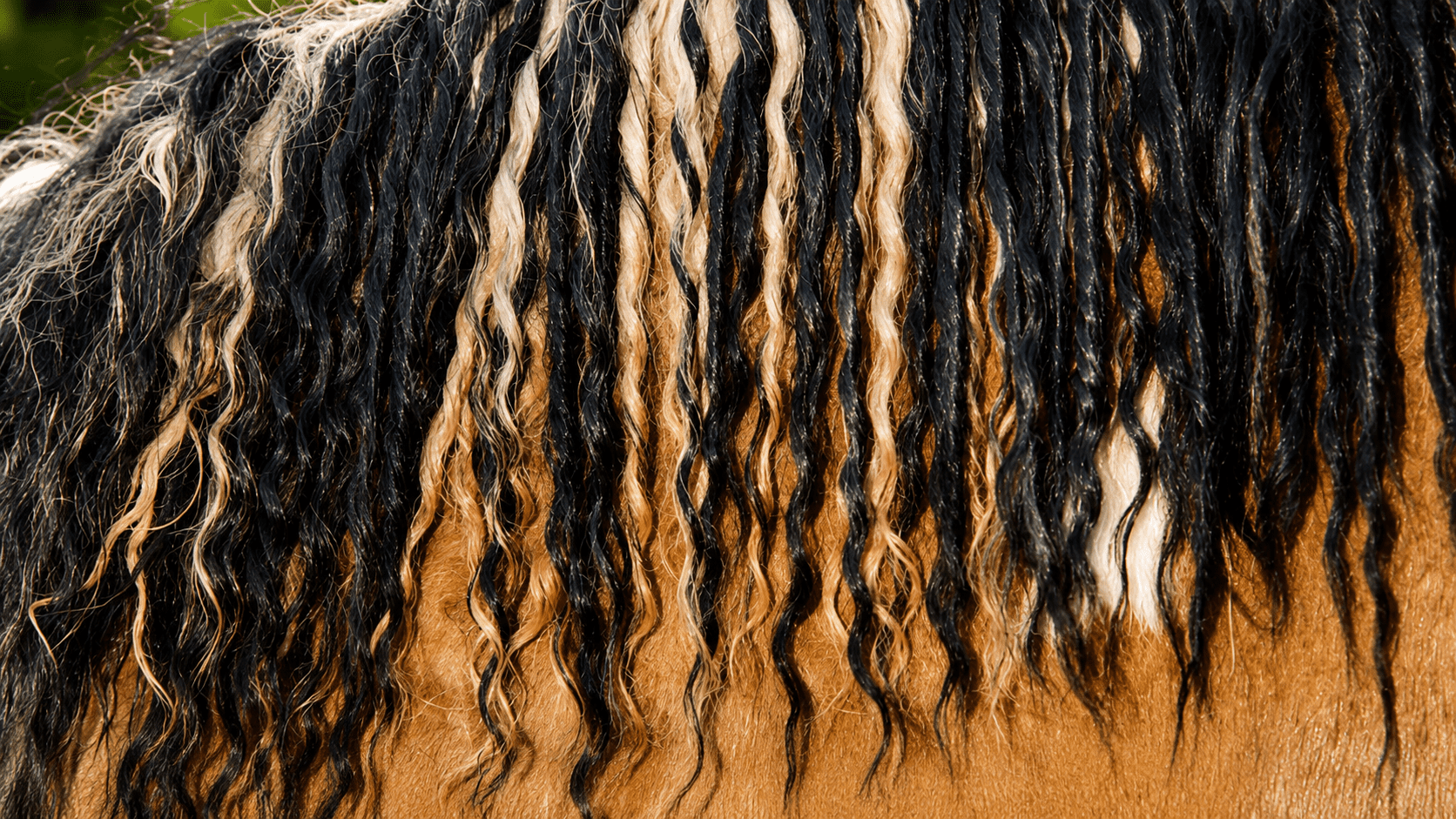
Courtesy of Three Feathers Farm
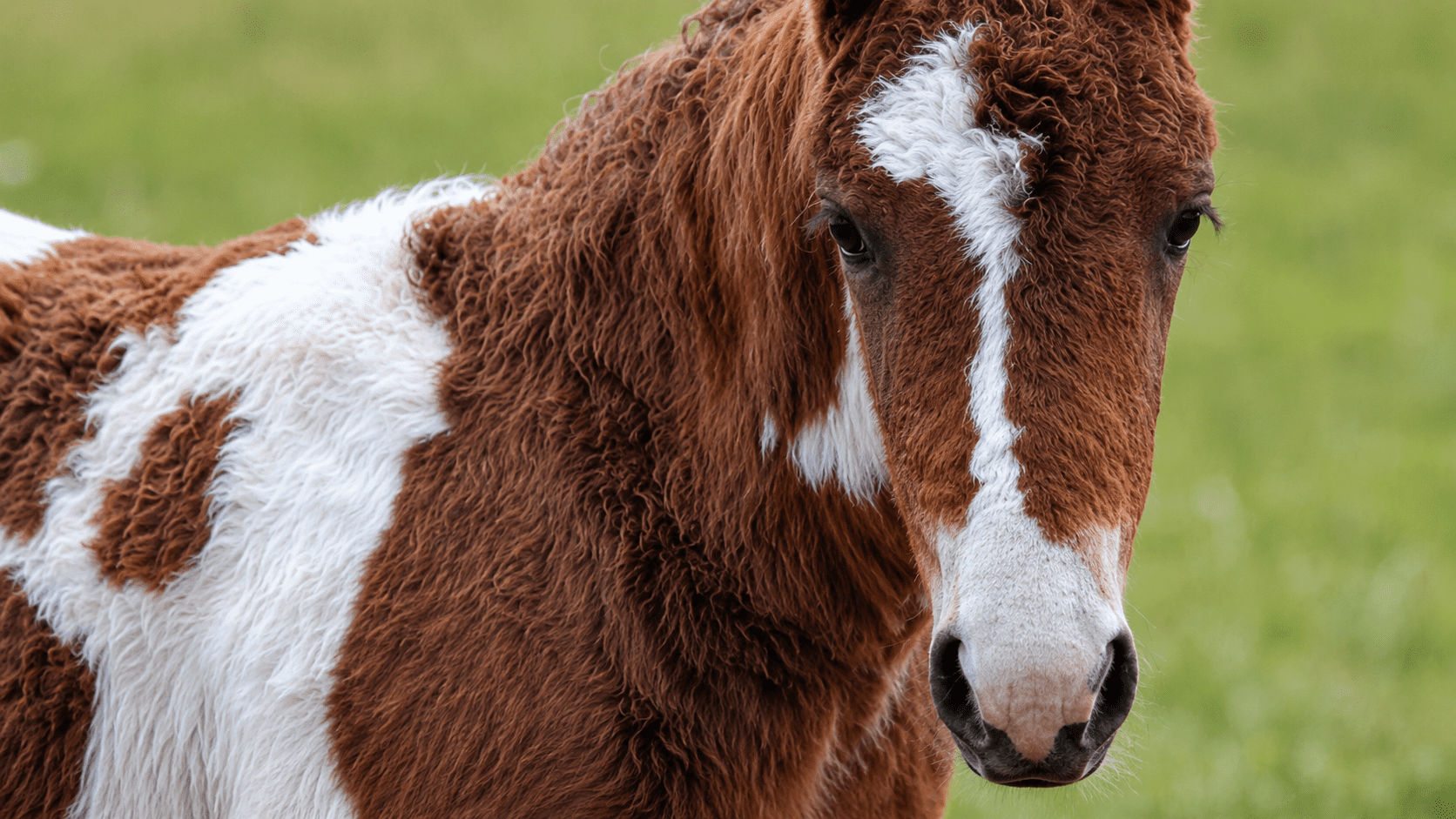
Courtesy of Stag Creek Farm
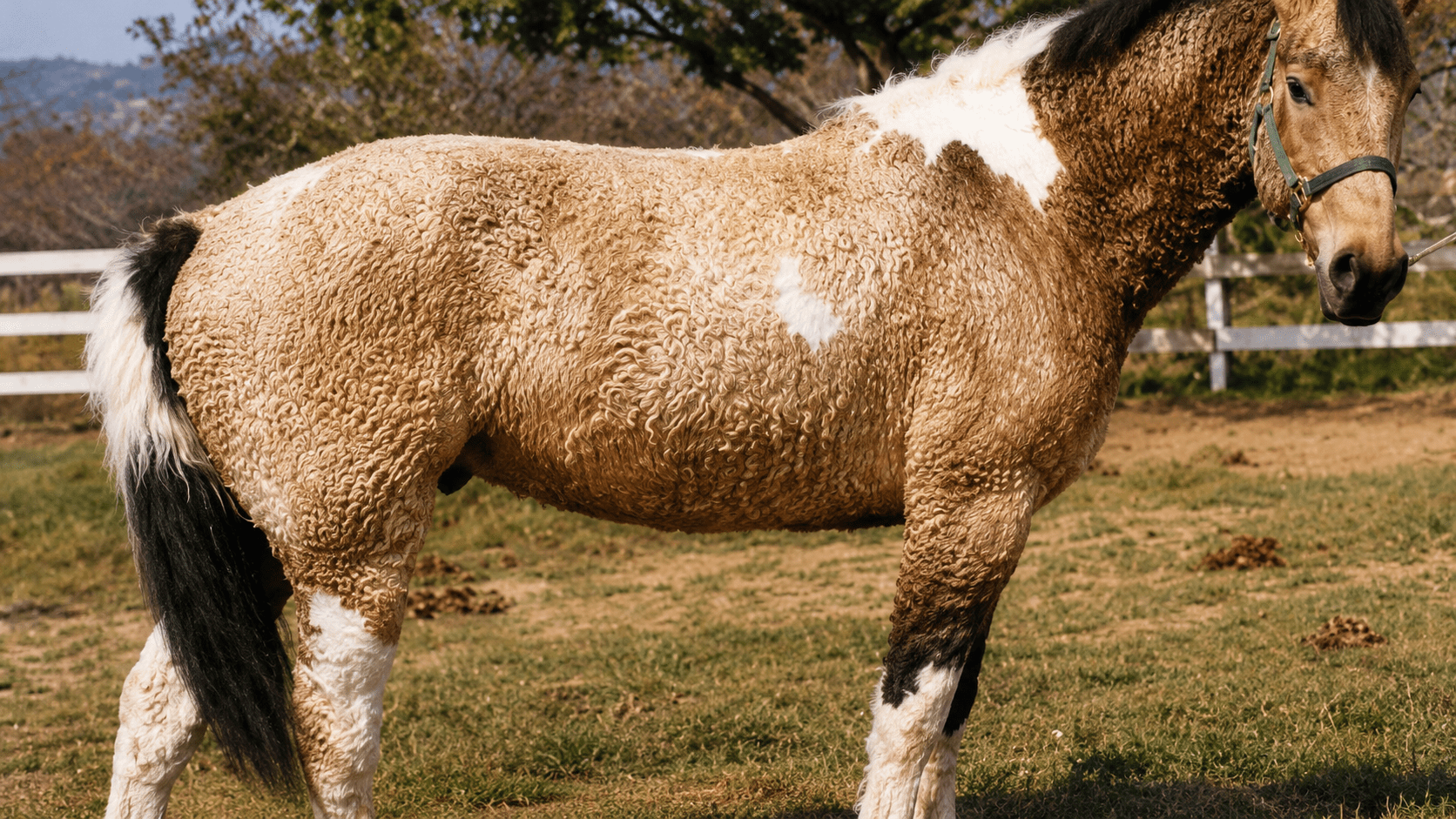
ABC 11 Pets Ghengis Khan
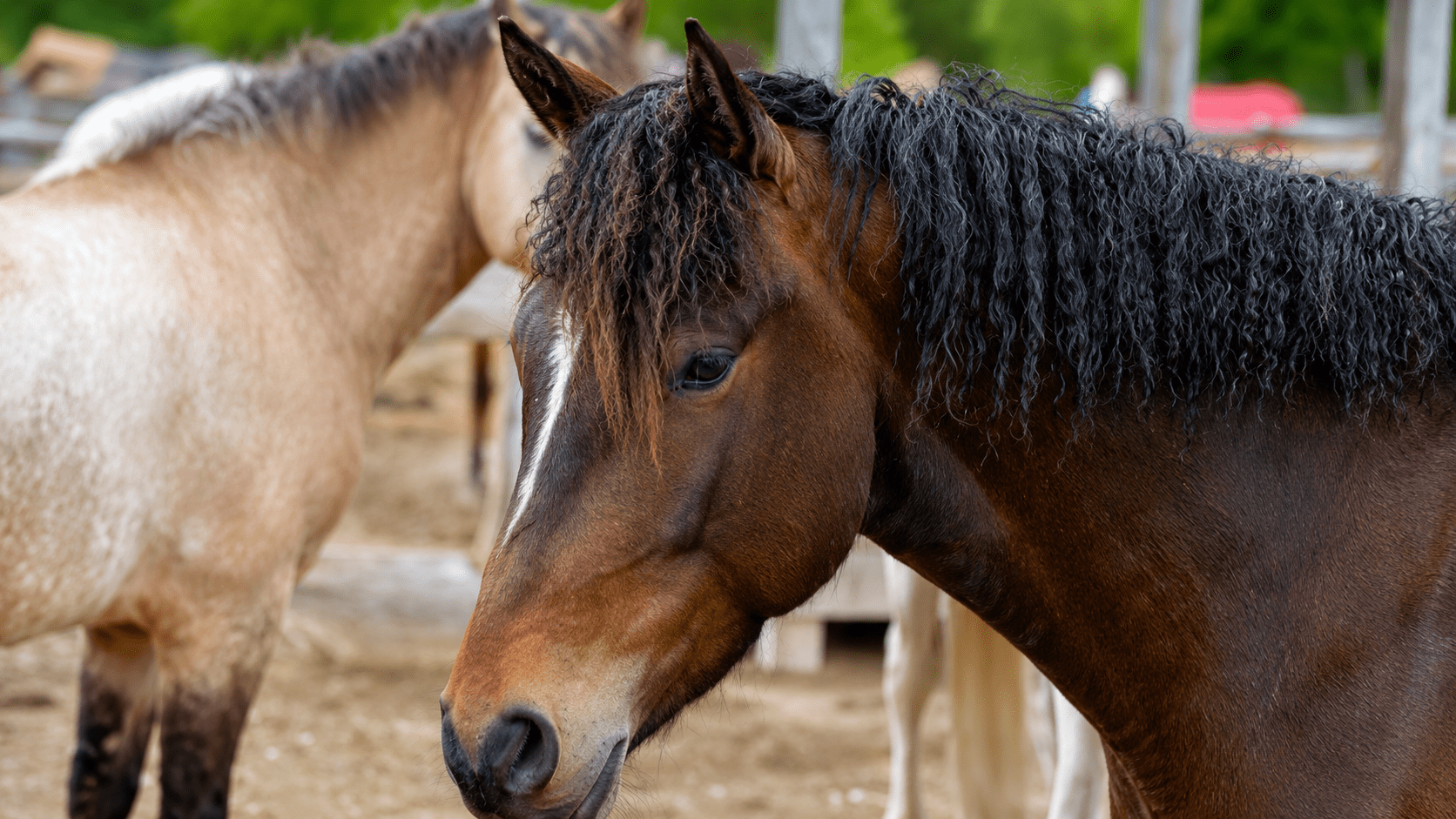
Courtesy of Caren & Peter Schumann
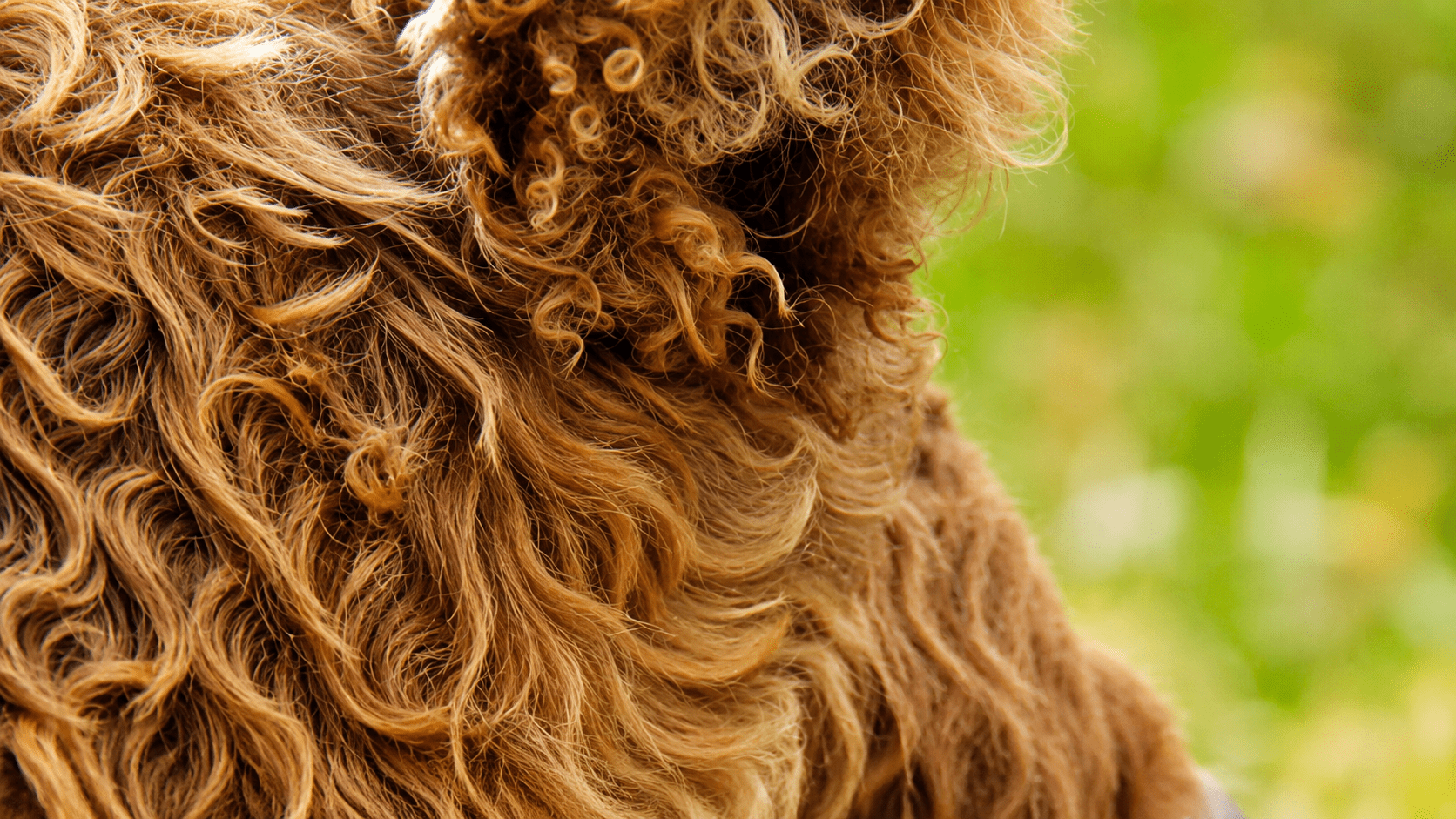
Courtesy of Three Feathers Farm
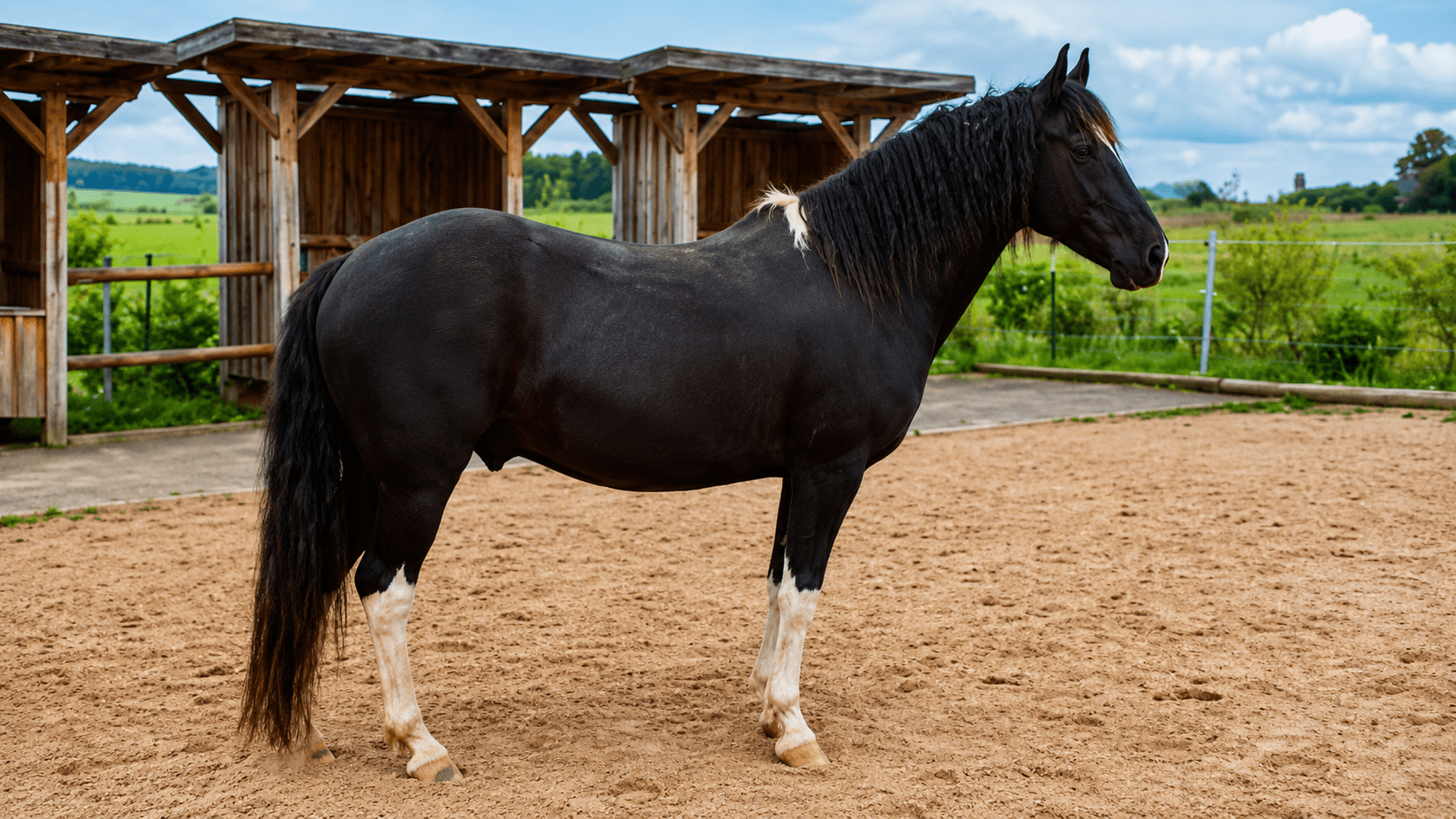
Courtesy of Caren & Peter Schumann
- Wide set eyes with eyelashes that curl up
- Ears that are short to medium in length with curls inside(ear hair does not totally shed out in the summer)
- A medium length neck, deep at the base of the neck where it joins the base of the shoulder
- Noticeably short back, deep through the girth
- An appearance of a long under line and belly cut high in the flank
- Heavy boned legs and short cannon bone as compared to the forearm
- Medium withers and a flat croup with a shallow slope to the base of the tail.
- Body (Fine, soft hair)
- Ringlet (can be several inches long)
- Marcel Wave (deep soft wave in the body coat)
- Crushed Velvet (soft dense pile of curls in body coat)
- Extra fine hair
- Kinky-preferable
- Wavy
- Should shed all or partial in the summer
- Split mane (hangs on both sides of neck)
- Ringlets
- Wavy
- Should shed partial at the head of the tail in the summer or some horses may shed tail completely
- Curly – preferable
- Wavy
- Should shed in summer but still retain some long hairs
- Almost perfectly round in shape
- Very hard and dense
- Proportioned to the size of the horse
- Average size – 15 hands; there are some exceptions from 13.3 hands to 16 hands
- Average weight – 800 to 1000 pounds; some curlies may weigh up to 1200 pounds
- Curly coat can be hypoallergenic (the horsehair is round instead of flat and testing has shown the hair to be closely related to mohair)
- Noticeably short, strong back
- Even-tempered disposition
- Quick pulse and respiration recovery
- Very dense bone in the legs